
All works
Vedveer Arya's books and papers, and the Fact Cards drawn from each.
13 works: five volumes and eight papers, with 187 Fact Cards drawn from them.
The Chronology of India
3 works, 99 cards, 14400 BCE – 1975 CE
From Manu to the Mahābhārata, then two volumes from the Mahābhārata war to the medieval era. Some chapters of Volume II also appear in Indo-European Civilizations, Volume Two.

Chronology of India: From Manu to Mahabharata
Reconstructing 16,000 Years of India's Civilizational Past
From Manu to Mahabharata: India's chronology from 14400 BCE to the war of 3162 BCE

The Chronology of India: From Mahabharata to Medieval Era, Volume I
India from the Mahābhārata war (3162 BCE) restored on its era epochs

The Chronology of India: From Mahabharata to Medieval Era, Volume II
Regional dynasties of India dated in the 583 BCE Śaka era


Chronology and Origins of Indo-European Civilizations
2 works, 65 cards, 14400 BCE – 1761 CE
Two volumes. World chronology revised across Egypt, Sumer, Assyria, Greece, Rome and Byzantium, then the Indo-European homeland question.
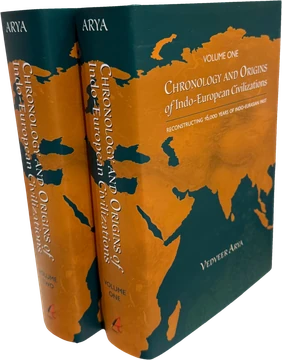
Chronology and Origins of Indo-European Civilizations, Volume One
Reconstructing 16,000 Years of Indo-Eurasian Past
The West's chronology corrected by 661 years, from Sumer to Britain
Chronology and Origins of Indo-European Civilizations, Volume Two
Reconstructing 16,000 Years of Indo-Eurasian Past
India from 14400 BCE, Asia's 661-year error and the Indo-European homeland
Papers and monographs
8 works, 23 cards, 11300–334 BCE
Standalone studies, each on one question, from astronomical, epigraphic and literary evidence.

“Archaeoastronomical Evidence for a Systematic Error of 661 Years in the Historical Chronology”
Astronomy shows a 661-year error in chronology: Jesus was born in 660 BCE

“Archaeoastronomical Study of the Chronology Related to the Age of Augustus and Jesus”
Jesus was born in 660 BCE: the Age of Augustus moves 661 years earlier

“Additional Astronomical Evidence: Achaemenid Kings, King Sulgi of the Ur III period and the Arsacid Era”
Eclipses date Achaemenid kings, Shulgi and an Arsacid era of 937 BCE
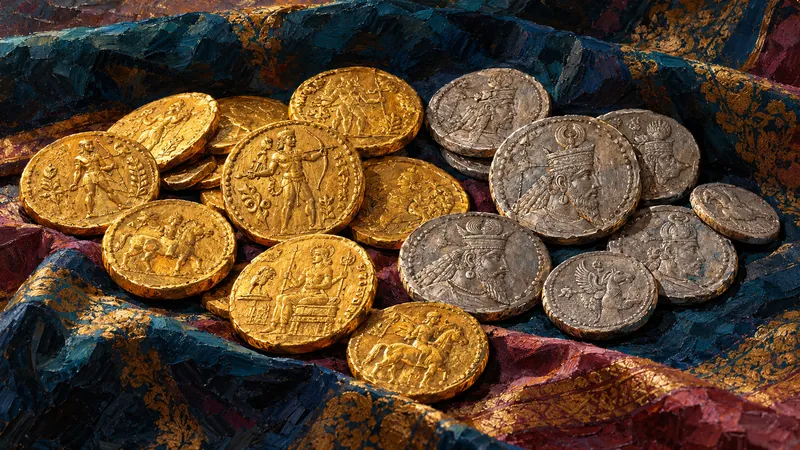
“The Gupta–Sasanian Synchronism and the Reconstruction of Ancient Indian Chronology: A Critical Reassessment of Epigraphic, Numismatic and Literary Evidence”
The Guptas began about 334 BCE, not 319 CE: the Gupta–Sasanian synchronism reassessed
Browse its 3 Fact Cards: The Gupta–Sasanian Synchronism and the Reconstruction of Ancient Indian Chronology: A Critical Reassessment of Epigraphic, Numismatic and Literary EvidenceWhat it establishes: The Gupta–Sasanian Synchronism and the Reconstruction of Ancient Indian Chronology: A Critical Reassessment of Epigraphic, Numismatic and Literary Evidence
“Absolute Dating of Karikāla Chola and Trilochana Pallava”
Karikāla Chola 1239–1156 BCE; Trilochana Pallava's Upputuru grant 1176 BCE

“Rigvedic Rasā River of the South Caucasus”
Saramā met the Paṇis on the Rigvedic Rasā, the Aras, about 11300–11200 BCE

“Śaka Era (583 BCE) and Śakānta Era (78 CE): The 661-Year Error in Indian Chronology — 101 Epigraphic Evidences”
His top 101 of more than 1,000 epigraphic and literary evidences, presented to reaffirm the distinction between the two Śaka eras, of 583 BCE and of 78 CE: dated inscriptions, each with its date, place, king and source.

“The Oldest Historical Solar Eclipse of Human History”
Atri's Observation of a Total Solar Eclipse During Samudra Manthan
Ṛṣi Atri's total solar eclipse in the Rigveda, 29 June 11218 BCE.
